
Seminyak Journal · Chapter 3
Bali keeps changing, but a day in this neighbourhood still unfolds in a distinctly Seminyak way.
Return to Seminyak after a few years and the changes are impossible to miss. Familiar shops have disappeared, new restaurants and hotels have arrived, and the traffic feels heavier than before. It is easy to say that Seminyak is no longer what it used to be.
That is partly true. Seminyak is not a neighbourhood preserved in its former shape. Yet the character of a place cannot be explained simply by counting how many old businesses remain. What keeps Seminyak distinctive is not an absence of change, but the particular way it absorbs change.
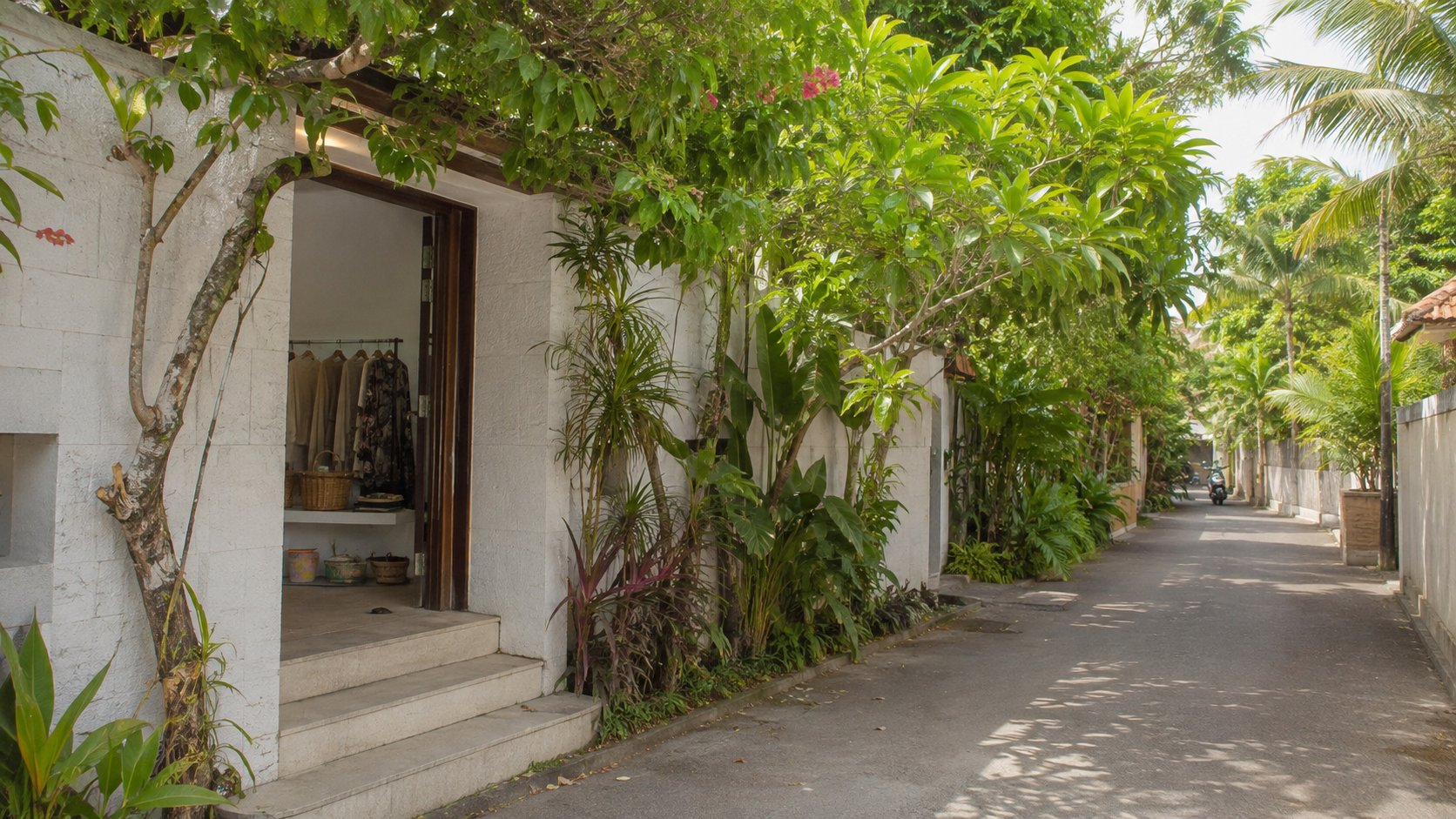
Seminyak’s appeal is not one landmark. It is the way very different kinds of days can flow naturally into one another.
01 · THE UNPLANNED DISCOVERY
The spaces between destinations stay with you
Seminyak has no single square or monumental attraction that explains the whole neighbourhood at a glance. Small shops, cafés, restaurants and villa entrances line Jalan Kayu Aya, Jalan Petitenget and Jalan Raya Seminyak, while narrower lanes branch away between them. Indonesia’s official tourism guide similarly describes Seminyak’s fashion scene as spread along its main roads and corners rather than concentrated in one shopping centre.
This layout can be inconvenient. Pavements narrow or disappear, and a place that looks close on a map may take longer to reach by car than expected. Yet that same imperfection means the journey rarely feels like empty time. On the way to dinner, you may notice a small ceramics shop. After coffee, you may find a garden at the end of a lane. Walking towards the beach, you may step into somewhere you never planned to visit.
People who love Seminyak often remember what they discovered by accident as clearly as what they intended to see.
02 · BEYOND THE DOORWAY
Quiet places hide behind busy streets
From the main road, Seminyak can seem relentlessly busy: scooters and cars passing, signs competing for attention, music drifting from one venue to the next. Then a single doorway changes everything. A small courtyard appears behind an entrance, a garden opens beyond a wall, or an interior room softens the noise of the street almost completely.
That contrast is central to Seminyak. The Oberoi still sits within fifteen acres of gardens, its low-rise spaces recalling a traditional village. Potato Head, by contrast, brings art, reuse and contemporary design into a beachfront programme of food, music and performance. Different in age and scale, both offer more than their street-facing façades reveal.
Many of Seminyak’s best spaces do not announce themselves all at once. You pass through a narrow entrance, follow a shaded path and only then understand the place. The experience of entering can be more memorable than the building itself.
03 · A DAY WITH MANY RHYTHMS
One day can hold more than one mood
Some parts of Bali suggest a fairly clear rhythm: surf, stay within a resort, or spend the day travelling between temples and landscapes. In Seminyak, you do not have to choose just one kind of day.
You can begin quietly over breakfast, browse small boutiques and homeware shops before lunch, and retreat to your hotel or a spa during the hottest hours. As the light softens, the beach draws you west. After dinner, the evening can end in a quiet bar or continue somewhere with music. These are not separate itineraries so much as different moods connected within the same neighbourhood.
This is why Indonesia’s tourism guide presents Seminyak as a coastal district where fashion, dining and accommodation meet. Its strength is not simply the number of choices, but how easily different choices can belong to the same day.
04 · PAST MEETS PRESENT
Established names share the street with new ideas
Seminyak still has names that have shaped it over decades. As Chapter 2 explored, The Oberoi, La Lucciola, BIASA, KU DE TA and Potato Head each changed the direction of the neighbourhood in a different period. What matters is that none of them remains frozen like a museum piece.
Long-standing venues protect their identity while updating menus, services and programmes. Newer spaces bring international design and taste, then reinterpret them through the tropical climate, local materials and Balinese craft. Not every attempt succeeds; trend-driven places can disappear as quickly as they arrive. Even so, Seminyak has long served as one of Bali’s testing grounds for new approaches to hospitality and spatial design.
Change here is more than the arrival of another new business. A very different idea appears beside a familiar place, and two eras compete, overlap and sometimes learn from each other on the same street.
05 · A LIVING CULTURE
Everyday Balinese life continues inside the resort town
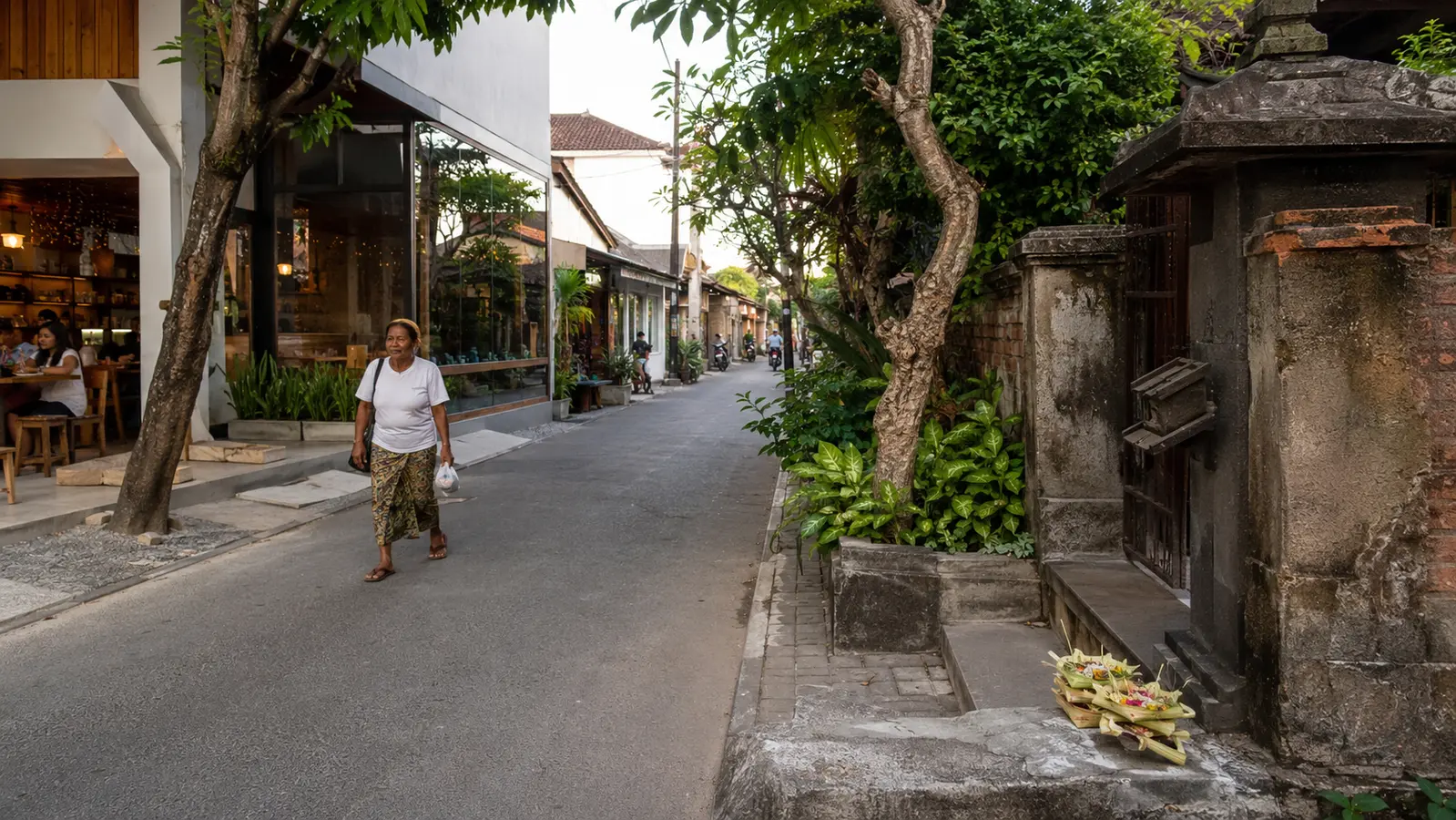
See Seminyak only as a collection of restaurants and beach clubs and you miss something essential. Petitenget Temple remains a place of worship and ceremony close to a shoreline now lined with hotels and bars. Canang sari offerings appear by the roadside each morning, and on ceremonial days processions take priority over the usual movement of traffic.
These are not traditional scenes arranged for visitors. They belong to people’s daily lives, not to a decorative background separate from the commercial streets. Modern Seminyak has grown around this living culture, and both continue to share the same spaces.
Seminyak has grown into an international resort destination, welcoming tastes and influences from around the world. At the same time, Balinese daily life, religious practice and long-held traditions remain present within its contemporary landscape.
Much of Seminyak’s character comes from the natural coexistence of international sophistication and Bali’s own living culture.
06 · THE DAILY PAUSE
At sunset, everyone looks in the same direction
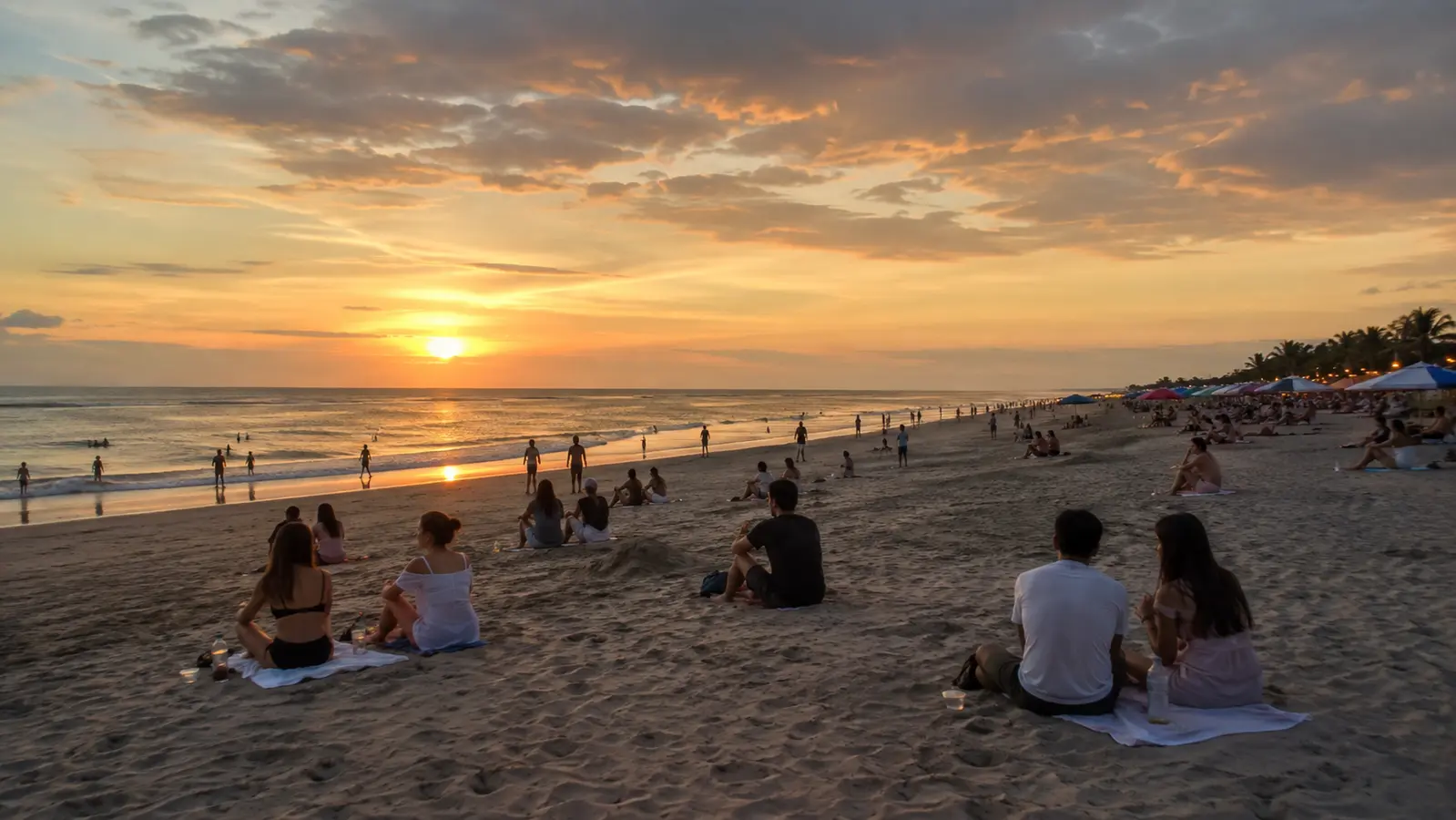
During the day, people in Seminyak scatter towards different destinations: shops, cafés, hotels, surf breaks and work. In late afternoon, however, the movement begins to turn west.
Some people have reserved a table at a beach club. Others sit directly on the sand, or wait with nothing more than a cold drink in hand. Budgets and rituals differ, but sunset needs little explanation. For a while, the neighbourhood’s polish and congestion recede, and the sea and sky become its centre.
However much the neighbourhood changes, people still slow down when the sun begins to fall.
THE HONEST PART
Seminyak is not perfect
The traffic can be exhausting and the walking conditions inconsistent. Development moves quickly; yesterday’s open view may be today’s construction site. Prices at popular venues can feel far removed from everyday costs elsewhere in Bali. Any description of Seminyak as effortlessly elegant and relaxing would ignore its reality.
But charm is not the same as perfection. Seminyak is full of contradictions: crowded roads and quiet courtyards, an old temple and contemporary architecture, a simple evening on the sand and a carefully staged night out. Its strength lies in letting you move between those worlds and choose your own pace.
A CHARACTER OF ITS OWN
What does it mean to feel like Seminyak?
Seminyak is not Bali’s newest, quietest or most traditional destination, and it does not need to be the best at everything. What it offers is the chance to encounter several faces of Bali within a single day.
Established places remain while new ideas keep arriving. Quiet spaces wait behind the noise of the street, and the sea is there for everyone at the end of the day. Seminyak’s appeal does not belong to any one of these elements. It comes from the surprisingly natural way things that should not quite fit together continue to share the same neighbourhood.
That is why Seminyak can feel different from the past and still retain a character of its own. It is not a place where history has been sealed away, but one where past and present keep finding a new balance.
Sources and further reading
Information was checked against Indonesia Travel’s Seminyak guides and official information from The Oberoi and Potato Head. Venue programmes and local conditions may change; check current information before visiting.