When planning a trip to Bali, most visitors begin by choosing the places they want to visit, such as Uluwatu, Jimbaran, Seminyak, Canggu, and Ubud.

However, on a short trip, it is important to check the actual travel time between your accommodation and each destination before finalizing your itinerary.


Why Traffic Matters More Than Distance in Bali

In Bali, the distance shown on a map can be very different from the actual travel time. Many roads connecting popular tourist areas are narrow, and cars, motorcycles, and tourist vehicles often use the same routes at the same time.

A journey shown as approximately 30 minutes on a map may take more than an hour during commuting hours, around sunset, on weekends, during roadworks, local events, or heavy rain.


The main rule for a short Bali trip is simple: choose your accommodation first, then group each day’s destinations within the same area.


The main rule for a short Bali trip
Choose your accommodation first, then group each day’s destinations within the same area. A route that appears to take 30 minutes may take more than an hour during busy periods.

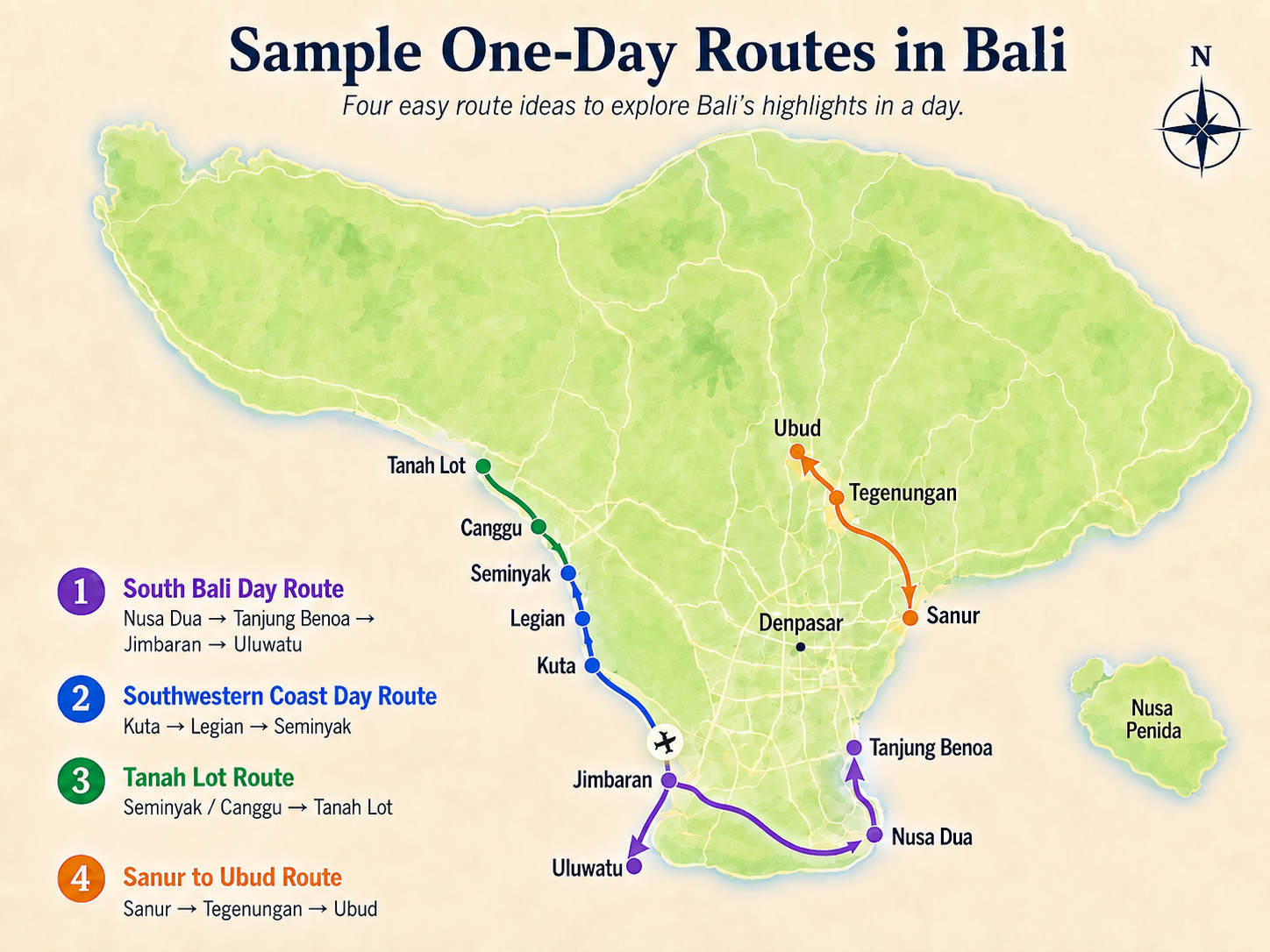
Sample one-day travel routes in Bali grouped by area
Suggested one-day routes grouped by area to reduce unnecessary travel time.

Three Common Ways to Travel in Bali

1. Staying in One Area and Taking Day Trips

First-time visitors and travelers using package tours often stay in a resort area such as Nusa Dua and visit Bali’s major attractions by car.

Typical activities and destinations include:

  • Water sports in Tanjung Benoa
  • A beachfront meal in Jimbaran
  • Uluwatu Temple and sunset
  • Tanah Lot Temple
  • Ubud Palace and Ubud Market
  • The rice terraces of Tegallalang

The main advantage of this approach is that you do not need to change hotels. However, traveling from Nusa Dua to more distant areas such as Ubud or Canggu can require a significant amount of time for the return journey.

When several attractions from different parts of Bali are included in one day, it is possible to spend more time traveling by car than actually visiting the destinations.

2. Dividing Your Stay Between Several Areas

Independent travelers often divide their accommodation between two or three areas, depending on the length of their trip.

Example for a seven-night trip:

Two nights in Nusa Dua or Jimbaran
Two nights in Seminyak
Three nights in Ubud

This approach requires changing hotels, but it reduces the need to make repeated long-distance return journeys to different sightseeing areas.

From Nusa Dua, travelers can explore South Bali. From Seminyak, they can visit Kuta, Legian, and Seminyak. After moving to Ubud, they can explore central Ubud and the areas to the north at a more comfortable pace.

Another option is to visit attractions located along the route on the day you change hotels. This can reduce the need to travel to an attraction and then return along the same road.

3. Staying Longer in One Area and Traveling at a Slower Pace

Some repeat visitors choose to stay in one area for a longer period.

They use restaurants and cafés near their accommodation, walk along local streets and beaches, and experience the area as part of their daily routine.

In Canggu and Ubud, cafés, restaurants, spas, shops, and attractions are spread across relatively large areas. For this reason, staying locally and exploring slowly may be more practical than visiting only a few famous places in a short period.

Consider staying locally
When several places in Canggu or Ubud are on your itinerary, staying in the area may be more efficient than making a long day trip.

Choosing Areas According to the Length of Your Trip

Bali’s main tourist areas can be grouped into several practical travel zones.

Area Main Destinations Main Travel Consideration
South Bali Nusa Dua, Tanjung Benoa, Jimbaran, Uluwatu A practical area for resort stays, beaches, water sports, and sunset visits.
Southwestern Coast Kuta, Legian, Seminyak Short distances can still involve slow local traffic.
Western Area Canggu, Tanah Lot Afternoon and sunset traffic can significantly increase travel time.
Southeastern Area Sanur Sanur generally provides easier access toward Ubud than the southwest coast.
Central Bali Ubud Narrow central roads and dispersed attractions require additional time.

A trip of ten nights or less can include several of these areas. However, for a trip of seven nights or less, focusing on approximately two main areas usually reduces unnecessary travel.

Travelers with longer stays can extend their journey to Menjangan in northwestern Bali, Amed and Tulamben in eastern Bali, Lovina in northern Bali, or continue by boat to Nusa Penida, the Gili Islands, and Lombok.

These destinations require longer road journeys or sea transfers. They are generally more suitable for separate overnight stays than short day trips from South Bali.

Why Google Maps Travel Times Are Not Always Enough

Many roads in southern and central Bali are narrow two-lane roads that pass through villages, commercial areas, and busy tourist neighborhoods.

A stopped vehicle, passenger drop-off, roadwork, ceremony, or large tourist vehicle can slow the traffic behind it. During busy periods, motorcycles, pedestrians, and parked vehicles may further reduce the available road space.

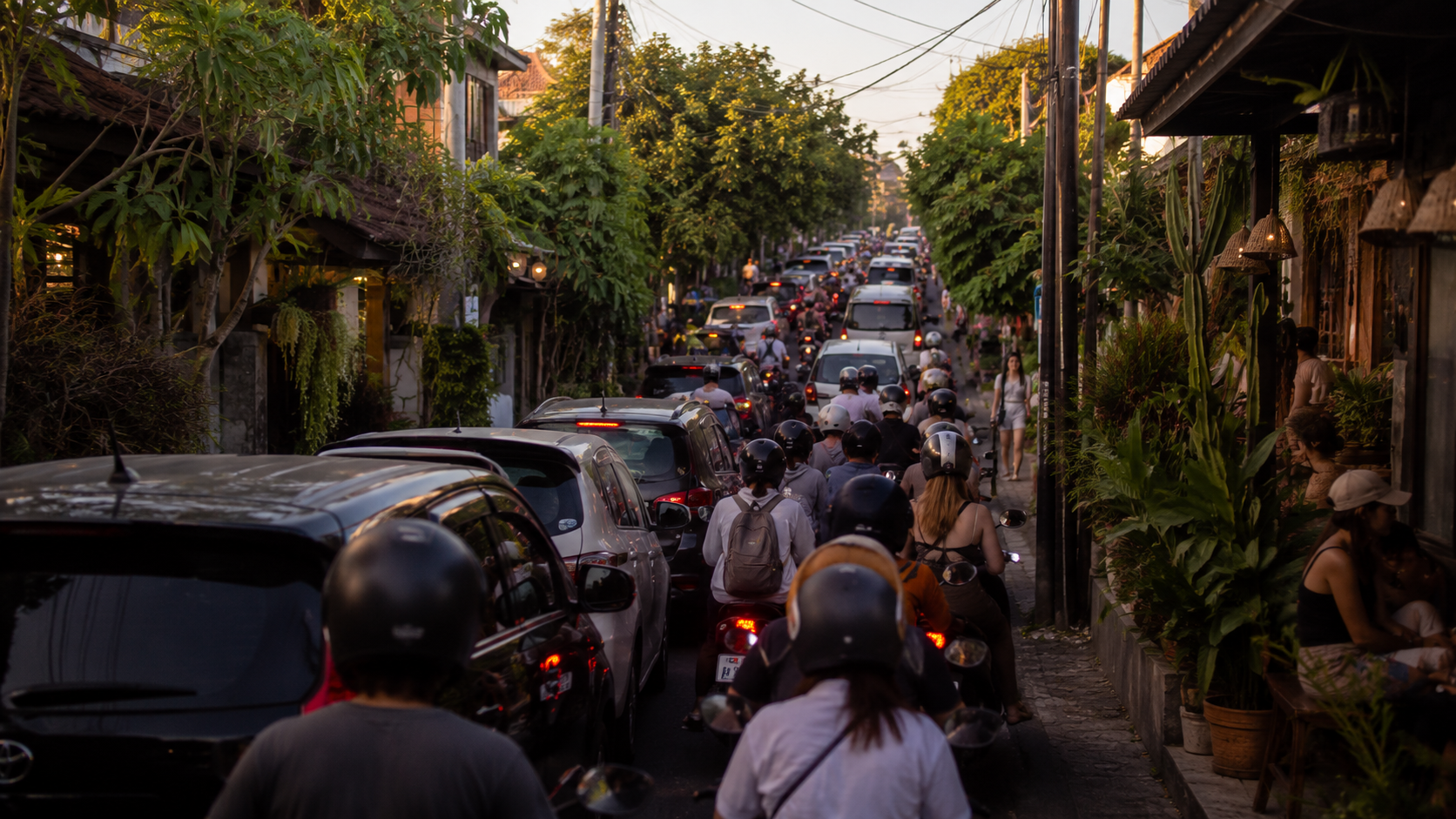
Cars and motorcycles in traffic on a narrow Bali road at sunset
Traffic on Bali’s narrow roads can change quickly depending on the area and time of day.

When planning a route, consider more than the driving time displayed between the hotel and the destination.

  1. Travel time to the first destination
  2. Time required for parking and passenger drop-off
  3. Travel time within the destination area
  4. Travel time to the next attraction
  5. Return travel time during the afternoon or evening

Travel estimates shown on a map change according to current conditions. A road that is clear in the morning may be congested when you return later in the day.

Plan by area, not by attraction count
On a short trip, reducing unnecessary travel is often more practical than adding one more destination.

Traffic in Canggu Requires Special Planning

Canggu is located north of Seminyak and appears relatively close on a map. However, travel times between Seminyak and Canggu can vary considerably depending on the time of day.

The actual journey also depends on where you start in Seminyak and which part of Canggu you are visiting. Canggu includes several separate neighborhoods, including Berawa, Batu Bolong, Echo Beach, and Pererenan.

Departure Time Possible Travel Time
Early morning Approximately 20–30 minutes
Daytime Approximately 40–60 minutes
Late afternoon and sunset One hour or longer
Late evening Approximately 30–50 minutes
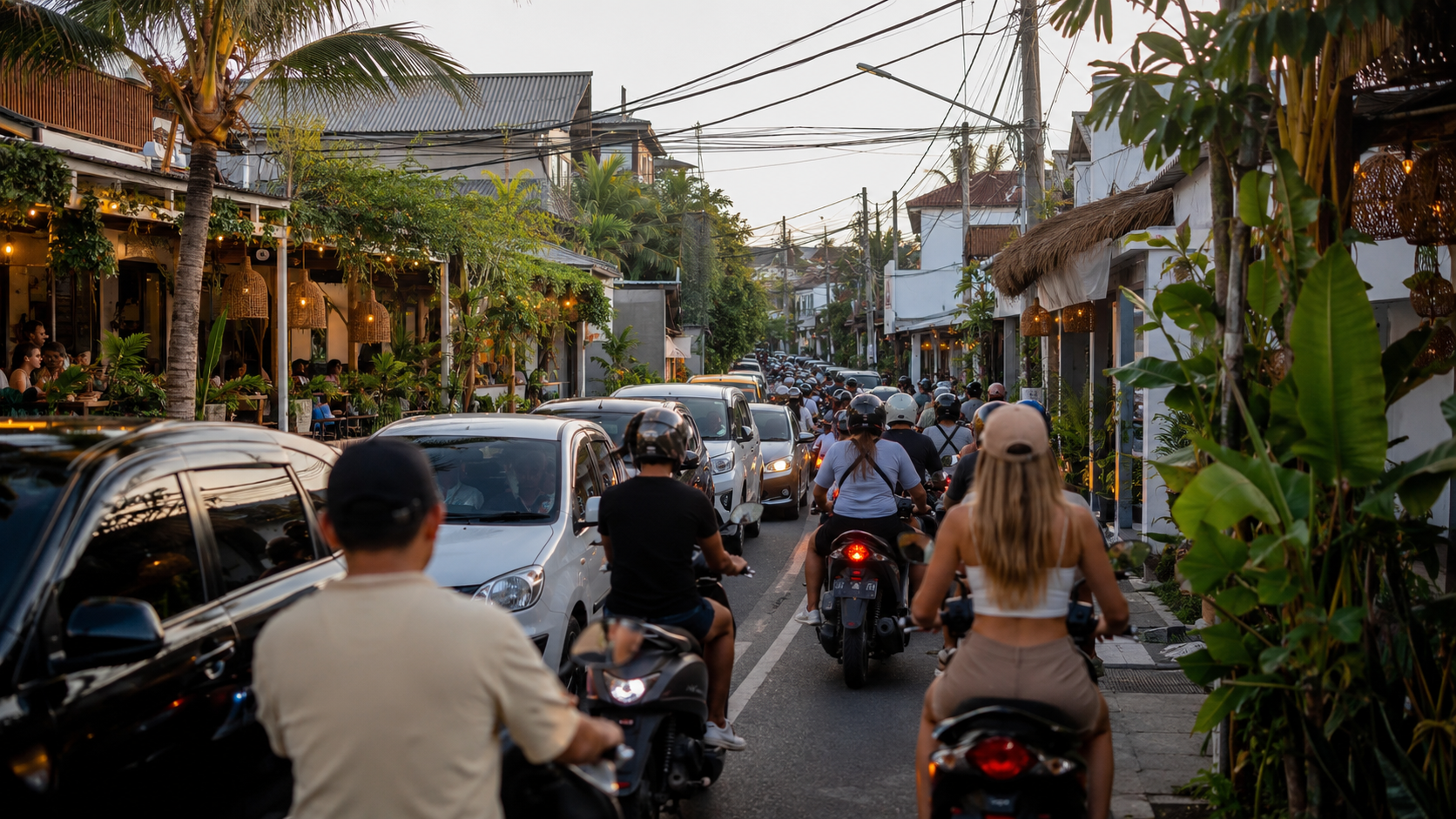
Cars and motorcycles in heavy traffic on a narrow road in Canggu Bali
Travel times in Canggu can increase considerably during the late afternoon and around sunset

Travelers planning to visit several cafés, beaches, restaurants, or beach clubs may find it more practical to treat Canggu as a separate full-day destination or stay in the area.

For a day along the southwestern coast, Kuta, Legian, and Seminyak can be grouped together. Canggu is generally easier to manage as a separate itinerary.

Canggu is more than one neighborhood
Reaching Canggu does not mean that every beach, café, or restaurant is nearby. Additional travel time may be needed within the area.

Traffic in Ubud Also Requires Additional Time

Ubud is one of Bali’s best-known cultural destinations. The central area around Ubud Palace, Ubud Market, the Monkey Forest, and major shops has narrow roads with many pedestrians, motorcycles, and tourist vehicles.

Typical travel times to Ubud vary according to the starting area and traffic conditions.

Starting Area Typical Travel Time
Sanur Approximately 45 minutes to 1 hour
Kuta or Legian Approximately 1 to 1.5 hours
Seminyak Approximately 1.5 hours
Canggu Approximately 1.5 hours
Nusa Dua Approximately 1.5 to 2 hours
Uluwatu More than 2 hours
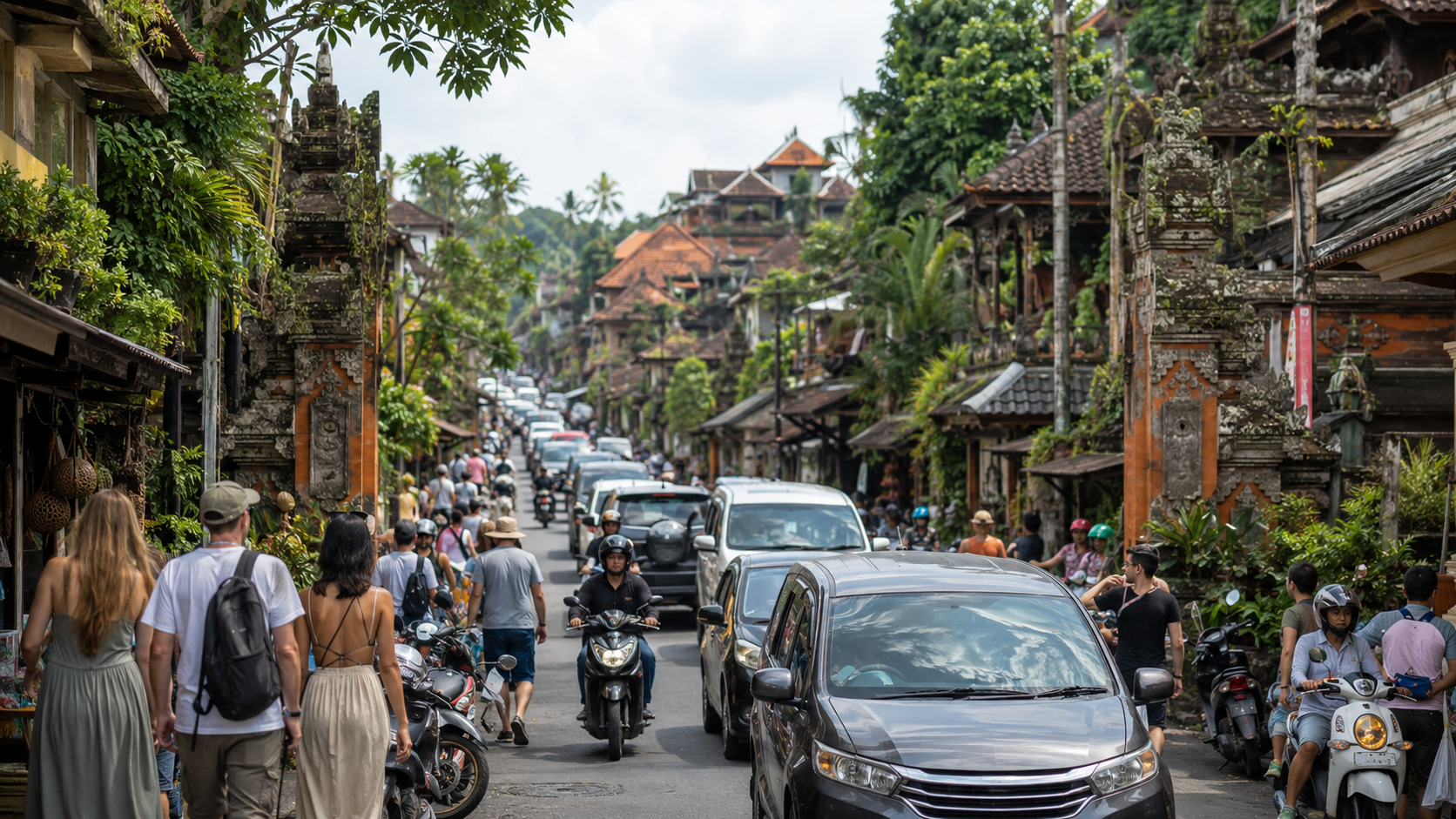
Alternative Text: Cars scooters and pedestrians on a busy narrow road in central Ubud Bali
Central Ubud combines narrow roads, pedestrians, motorcycles, and tourist vehicles

Ubud Palace, Ubud Market, and the Monkey Forest are located in or near the town center. However, Tegallalang, Tirta Empul, Kintamani, and many waterfalls are located in different directions.

For a Ubud day trip, it is usually better to choose either the central area or the northern attractions instead of trying to include both.

Travelers who want to explore several parts of Ubud may consider staying in the area and dividing the itinerary over two or more days.

Consider staying in Ubud
Staying locally can replace several hours of return travel with more time for walking, dining, cultural attractions, and rest.

Suggested One-Day Routes by Area

The following routes group nearby destinations into the same day. Travel times are general estimates and may change according to the exact starting point, time of day, weather, roadworks, ceremonies, and local traffic.

1. South Bali Day Route

Nusa Dua → Tanjung Benoa → Jimbaran → Uluwatu

Suggested schedule

Morning: Water sports in Tanjung Benoa
Lunch: Nusa Dua or Jimbaran
Afternoon: Uluwatu coastal area or a nearby café
Evening: Uluwatu Temple, sunset, and the Kecak dance
After the performance: Return to Jimbaran or your accommodation

Route General Travel Time
Nusa Dua to Jimbaran Approximately 20–35 minutes
Nusa Dua to Uluwatu Approximately 30–50 minutes
Jimbaran to Uluwatu Approximately 30–50 minutes
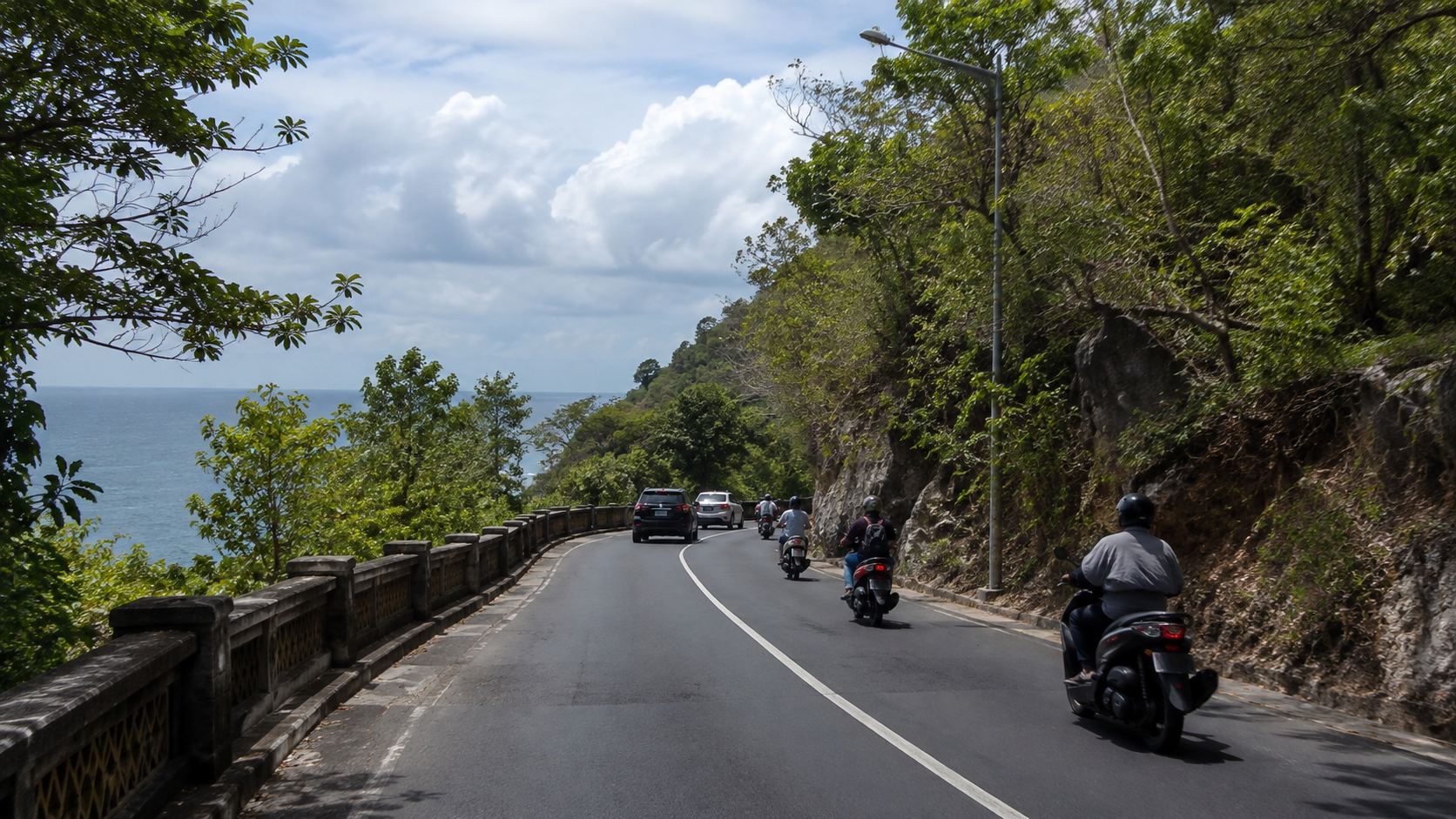
Cars and scooters traveling along a coastal road in South Bali
Grouping Nusa Dua, Jimbaran, and Uluwatu within one day can reduce unnecessary cross-island travel.

These destinations are all located within South Bali, so the route is generally more practical than combining Uluwatu with Canggu or Ubud.

Traffic can still increase around sunset, particularly when many vehicles leave Uluwatu Temple after the Kecak performance.

2. Southwestern Coast Day Route

Kuta → Legian → Seminyak

Suggested schedule

Morning: Kuta Beach or shopping
Lunch: Legian
Afternoon: Cafés, shopping, or a spa treatment in Seminyak
Evening: Sunset and dinner near Seminyak Beach

Kuta, Legian, and Seminyak are connected along the southwestern coast and can be grouped into one day.

Traffic within these areas may still be slow. Short journeys may sometimes be easier on foot or with a motorcycle ride-hailing service, depending on the location and weather.

Adding Canggu to this route can significantly increase the travel time, especially in the late afternoon.

Keep Canggu separate
Kuta, Legian, and Seminyak form one practical coastal route. Canggu is generally easier to manage as a separate half-day or full-day itinerary.

3. Tanah Lot Route

Seminyak or Canggu → Tanah Lot

Suggested schedule

Morning: Free time in Seminyak or Canggu
Early afternoon: Lunch and departure toward Tanah Lot
Late afternoon: Explore the temple area
Evening: Sunset at Tanah Lot
After sunset: Return to Seminyak or Canggu

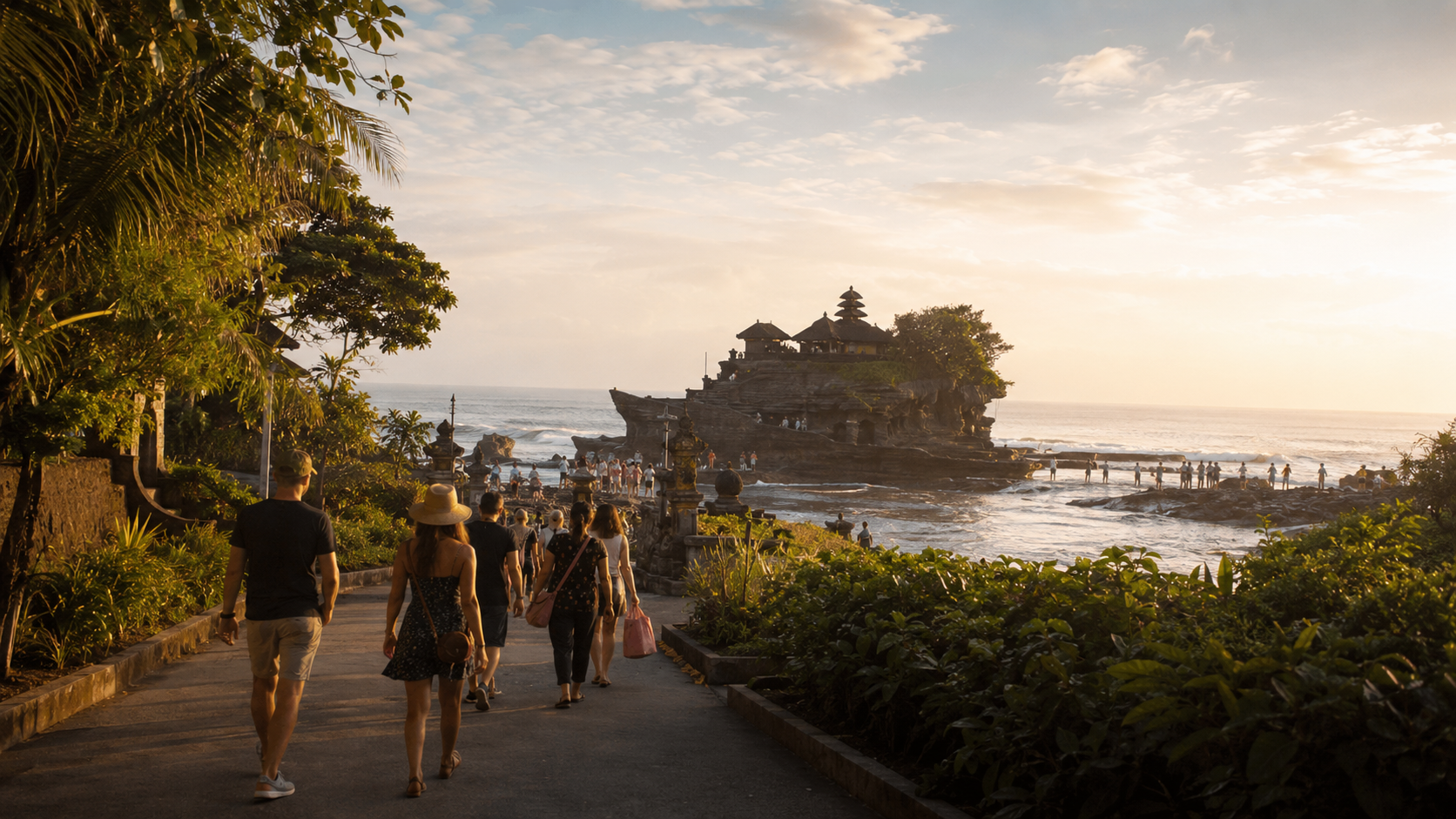
Road leading toward Tanah Lot temple in Bali during the late afternoon
Tanah Lot is commonly visited in the late afternoon, when traffic also begins to increase.

Tanah Lot can be visited from both Seminyak and Canggu. Canggu is generally closer, although actual travel times depend on the exact starting point and traffic conditions.

Many visitors leave immediately after sunset, so traffic near the parking area and surrounding roads may increase at that time.

It is more practical to keep this day focused on Tanah Lot and the western area than to add Ubud or South Bali destinations.

4. Sanur to Ubud Route

Sanur → Tegenungan Waterfall → Central Ubud

Suggested schedule

Early morning: Depart from Sanur
Morning: Visit Tegenungan Waterfall
Around lunchtime: Continue to central Ubud
Afternoon: Visit Ubud Palace, Ubud Market, or the Monkey Forest
Late afternoon: Return to Sanur

Sanur generally provides easier access to Ubud than the southwestern coastal areas.

Central Ubud and the return road toward Sanur may become congested in the afternoon. Travelers returning to Sanur should avoid leaving Ubud too late.

5. Central Ubud Route for Travelers Staying in Ubud

Ubud Palace → Ubud Market → Monkey Forest → Campuhan Ridge Walk

Suggested schedule

Morning: Ubud Palace and Ubud Market
Lunch: Central Ubud
Afternoon: Monkey Forest
Late afternoon: Campuhan Ridge Walk or a spa treatment
Evening: A traditional performance or dinner

Staying in Ubud allows travelers to explore the central area without making a long return journey.

Tegallalang, Tirta Empul, and Kintamani are better planned as a separate northern route on another day.

Suggested Accommodation Plans for Seven Nights or Less

The best accommodation plan depends on the purpose of the trip. The examples below are designed to reduce repeated long-distance travel while still allowing visitors to experience more than one side of Bali.

Resort Stay and South Bali Sightseeing

Four nights in Nusa Dua or Jimbaran + three nights in Seminyak

Possible activities include:

  • Relaxing at a resort in Nusa Dua
  • Water sports in Tanjung Benoa
  • Jimbaran and Uluwatu
  • Kuta, Legian, and Seminyak

Travelers who also want to visit Ubud should reserve a full day for it or divide the accommodation between three areas.

Beaches and Ubud

Three nights in Jimbaran or Seminyak + four nights in Ubud

Possible activities include:

  • South Bali beaches and Uluwatu
  • Free time in Seminyak
  • Central Ubud
  • Tegallalang, Tirta Empul, and Kintamani

Attractions located along the transfer route can be included on the day you change hotels. This can reduce repeated travel on the same roads.

Seminyak and Canggu

Three nights in Seminyak + four nights in Canggu

Seminyak and Canggu appear close on a map, but return travel can become difficult during congested periods.

Travelers who plan to visit several beaches, cafés, restaurants, or beach clubs in Canggu may find it more convenient to divide their accommodation instead of traveling back and forth from Seminyak every day.

Resort Stay and Ubud for a Honeymoon

Three or four nights in Nusa Dua or Uluwatu + three nights in Ubud

In South Bali, travelers can enjoy resort facilities, beaches, and Uluwatu. In Ubud, they can experience nature and cultural attractions.

Changing accommodation requires additional packing, but it can reduce repeated long-distance journeys between South Bali and Ubud.

Use hotel transfers as part of the itinerary
A hotel transfer day can include attractions located in the same direction, reducing unnecessary return journeys.

Travel Plans That Require Extra Care

Visiting Uluwatu, Canggu, and Ubud in One Day from Nusa Dua

Uluwatu, Canggu, and Ubud are located in different parts of Bali.

Trying to visit all three in one day may result in more time being spent traveling between regions than at the destinations themselves.

Travelers staying in Nusa Dua can group Uluwatu and Jimbaran into a South Bali itinerary. Canggu and Ubud are better planned as separate days.

Adding Canggu to a Kuta, Legian, and Seminyak Itinerary

Kuta, Legian, and Seminyak are connected within the same coastal area. Traffic between Seminyak and Canggu, however, varies considerably according to the time of day.

Travelers who want to visit Canggu should consider leaving early in the morning or planning it as a separate half-day or full-day itinerary.

Including Several Outer Ubud Attractions in One Day

Ubud Palace, Ubud Market, and the Monkey Forest are located near the center. Tegallalang, Kintamani, and the waterfalls are located in different areas.

These attractions are easier to manage when divided into separate routes:

  • Central Ubud
  • Tegallalang, Tirta Empul, and Kintamani
  • Southern Ubud waterfalls and temples

Principles for Planning Around Bali Traffic

Stay Within the Same Area Each Day

  • South Bali: Nusa Dua, Tanjung Benoa, Jimbaran, and Uluwatu
  • Southwestern coast: Kuta, Legian, and Seminyak
  • Western area: Canggu and Tanah Lot
  • Central Bali: Ubud
  • Southeastern area: Sanur

Begin Long-Distance Journeys in the Morning

Major roads are generally less congested early in the morning. When visiting Ubud or Canggu as a day trip, leaving earlier can make the itinerary easier to manage.

Allow Additional Time Around Sunset

Seminyak, Canggu, Tanah Lot, and Uluwatu attract many vehicles before and after sunset. Return journeys may take longer when visitors leave at the same time.

Consider Staying in Canggu or Ubud

Attractions, restaurants, and activities in Canggu and Ubud are spread across relatively large areas. When several locations are on the itinerary, compare a day trip with the option of staying for one or more nights.

Allow Extra Time When Traveling to the Airport

When traveling to the airport from Seminyak, Canggu, Ubud, or Uluwatu, leave earlier than the first travel estimate shown on the map.

Congestion, accidents, local events, weather, and roadworks can all affect the journey.

Allow extra airport time
Do not rely only on the first travel estimate shown on the map, especially when departing from Canggu, Ubud, Seminyak, or Uluwatu.

The Key to a Short Bali Trip Is an Efficient Route

Bali’s main tourist areas may appear close together on a map, but actual travel times vary considerably according to the time of day and road conditions.

For a trip of seven nights or less, it is useful to plan in the following order:

  1. Decide the main purpose of the trip.
  2. Choose the main accommodation areas.
  3. Group destinations from the same area into one day.
  4. Consider staying in congested areas such as Canggu and Ubud.
  5. Reduce the number of attractions on long-distance travel days.

Reducing unnecessary return journeys can often make a Bali itinerary more efficient than adding one more attraction.

The travel times in this article are general estimates. Actual journey times may vary according to the exact starting point, time of day, day of the week, weather, roadworks, accidents, ceremonies, and local events. Before departure, check a current map application and confirm local conditions with your hotel or driver.